
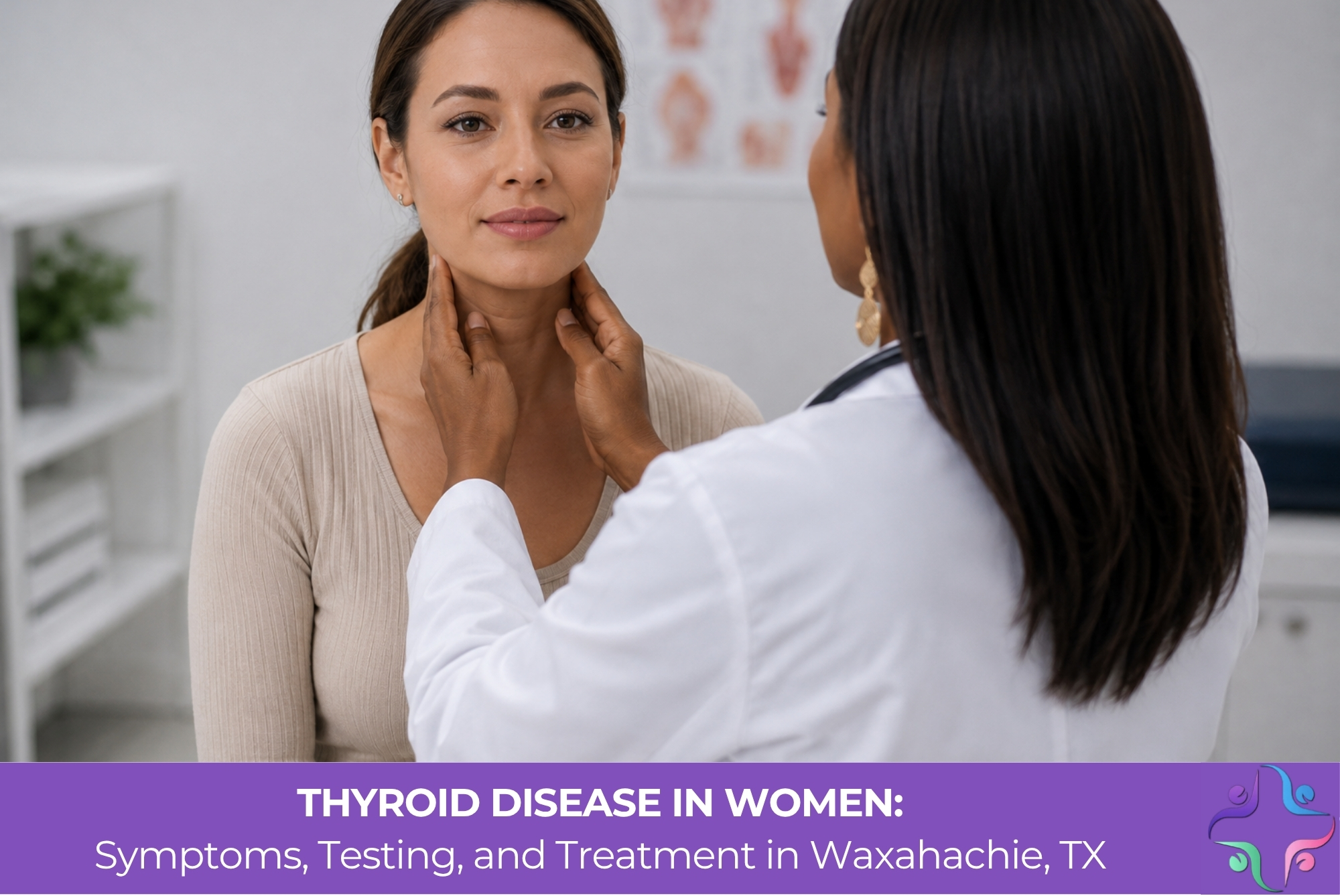
 Thyroid disease can affect energy, metabolism, heart rate, menstrual cycles, fertility, pregnancy, mood, weight, and many other aspects of a woman’s health. Because thyroid symptoms can overlap with stress, menopause, pregnancy, and other medical conditions, thyroid problems are sometimes difficult to recognize based on symptoms alone.
At Trinity Salem Family Health in Waxahachie, TX, women’s health services include screening and monitoring for health conditions that commonly affect women, including thyroid disease. A personalized evaluation can help determine whether symptoms may be related to an underactive thyroid, overactive thyroid, autoimmune thyroid condition, or another health concern.
According to the U.S. Office on Women’s Health, women are more likely than men to develop thyroid disease, and approximately 1 in 8 women will experience a thyroid problem during her lifetime. Thyroid disorders can also affect menstruation, fertility, pregnancy, and health after menopause.
What Is Thyroid Disease?
The thyroid is a small, butterfly-shaped gland located at the front of the neck. Although it is relatively small, it produces hormones that influence how the body uses energy and therefore affect nearly every organ, including the heart.
Thyroid disease is a broad term encompassing several conditions that affect the structure or function of the thyroid gland. Two of the most common functional thyroid disorders are hypothyroidism and hyperthyroidism.
Hypothyroidism occurs when the thyroid does not produce enough thyroid hormone. Hyperthyroidism occurs when the thyroid produces too much.
Other thyroid conditions include Hashimoto’s disease, Graves’ disease, thyroiditis, thyroid nodules, goiter, and thyroid cancer.
Why Is Thyroid Health Especially Important for Women?
Women experience thyroid disorders more frequently than men. Thyroid function also has important connections to reproductive and hormonal health.
Thyroid disease may contribute to changes in menstrual periods, including periods that become unusually heavy, light, irregular, or absent. It can also interfere with ovulation and make becoming pregnant more difficult. Thyroid problems during pregnancy require particular attention because appropriate thyroid hormone levels are important for maternal and fetal health.
Women may also develop thyroid disease after pregnancy or around menopause. Because symptoms such as fatigue, sleep problems, mood changes, and weight changes can have many possible causes, medical evaluation and appropriate testing are important rather than assuming these changes are simply hormonal or age-related.
What Is Hypothyroidism?
Hypothyroidism, commonly called an underactive thyroid, develops when the thyroid does not produce enough thyroid hormone.
Hashimoto’s disease is a common cause of hypothyroidism. Hashimoto’s is an autoimmune disorder in which the immune system mistakenly attacks the thyroid.
Common Symptoms of Hypothyroidism
Symptoms vary between individuals and can develop gradually. Possible symptoms may include:
- Persistent fatigue
- Feeling unusually cold
- Unexplained weight gain
- Dry skin
- Thinning or dry hair
- Constipation
- Muscle weakness or aches
- Difficulty concentrating
- Changes in mood
- Slower heart rate
- Heavy or irregular menstrual periods
- Fertility difficulties
Having one or more of these symptoms does not necessarily mean you have hypothyroidism. Many other health conditions can produce similar symptoms, which is why laboratory testing can be important.
What Is Hyperthyroidism?
Hyperthyroidism, or an overactive thyroid, occurs when the thyroid produces more thyroid hormone than the body needs.
Graves’ disease, another autoimmune condition, is the most common cause of hyperthyroidism.
Common Symptoms of Hyperthyroidism
Possible symptoms include:
- Unexplained weight loss
- Rapid or irregular heartbeat
- Heart palpitations
- Nervousness or irritability
- Trembling hands
- Increased sweating
- Heat intolerance
- Difficulty sleeping
- Muscle weakness
- Frequent bowel movements
- Changes in menstrual periods
Because these symptoms can occur with many other conditions, symptoms alone cannot reliably diagnose hyperthyroidism. Medical history, examination, and laboratory testing are typically used to determine whether thyroid hormone levels are abnormal.
Hashimoto’s Disease and Women
Hashimoto’s disease is an autoimmune thyroid disorder and a common cause of hypothyroidism. The immune system mistakenly targets thyroid tissue, which can gradually reduce the thyroid gland’s ability to produce hormones.
Women with persistent symptoms consistent with hypothyroidism may benefit from discussing thyroid testing with their healthcare provider, particularly when they have a personal or family history that increases concern for thyroid disease.
Thyroid antibody testing may sometimes be used to help determine whether an autoimmune thyroid condition such as Hashimoto’s disease or Graves’ disease is responsible for abnormal thyroid function.
Graves’ Disease and Women
Graves’ disease is an autoimmune condition and the most common cause of hyperthyroidism. It causes the thyroid to become overactive and produce excessive thyroid hormone.
The effects can extend beyond weight and energy levels. Untreated hyperthyroidism can affect cardiovascular health, bones, fertility, and other areas of health, making accurate diagnosis and appropriate management important.
Treatment depends on the cause and severity of hyperthyroidism, as there is no single treatment approach appropriate for every patient.
Thyroid Disease and Menstrual Health
The thyroid helps regulate processes that influence the menstrual cycle. Too much or too little thyroid hormone can contribute to periods becoming unusually light, heavy, or irregular. In some cases, periods may stop for an extended time.
Changes in menstruation have many possible causes, however. Thyroid disease is only one consideration, so persistent or unexplained menstrual changes deserve a broader women’s health evaluation.
Thyroid Disease and Fertility
Because thyroid dysfunction can affect menstruation and ovulation, it may also make becoming pregnant more difficult for some women.
Thyroid testing may therefore be considered as part of an evaluation when symptoms, medical history, menstrual changes, or fertility concerns suggest that thyroid function could be involved.
For women who already have thyroid disease and are planning a pregnancy, discussing thyroid management with a healthcare provider before conception can be especially valuable.
Thyroid Disease During Pregnancy
Pregnancy changes normal thyroid physiology. Two pregnancy-related hormones, human chorionic gonadotropin (hCG) and estrogen, influence thyroid function and thyroid laboratory results. This means thyroid test results during pregnancy need to be interpreted appropriately for pregnancy.
Thyroid hormones also play an essential role in fetal brain and nervous system development. During early pregnancy, the developing baby depends on thyroid hormone supplied by the mother.
Untreated or inadequately treated hypothyroidism during pregnancy has been associated with complications including miscarriage, anemia, preeclampsia, placental abnormalities, and postpartum hemorrhage, particularly when hypothyroidism is severe.
The American Thyroid Association published updated evidence-based guidelines in 2026 addressing thyroid disease during preconception, pregnancy, and the postpartum period.
Women who are pregnant, trying to become pregnant, or already receiving thyroid treatment should discuss appropriate thyroid monitoring with their healthcare provider.
What Is Postpartum Thyroiditis?
Postpartum thyroiditis is an autoimmune thyroid condition that can occur after childbirth. It may involve a period of increased thyroid activity followed by decreased thyroid activity.
Symptoms during the hypothyroid phase can sometimes resemble common postpartum experiences, including tiredness and mood changes. Other symptoms can include difficulty tolerating cold, dry skin, problems concentrating, or tingling sensations.
Persistent or concerning symptoms following pregnancy should be discussed with a healthcare provider rather than automatically being attributed to the demands of caring for a newborn.
Thyroid Disease and Menopause
Thyroid disease can also become an important consideration around menopause. The Office on Women’s Health notes that thyroid disease, particularly hypothyroidism, is more likely to develop after menopause. Thyroid symptoms can also sometimes be mistaken for symptoms associated with menopause.
Fatigue, sleep difficulties, weight changes, mood changes, and other symptoms deserve individualized assessment because multiple conditions may be responsible.
How Is Thyroid Disease Diagnosed?
Thyroid evaluation generally begins with a medical history, discussion of symptoms, and physical examination. Blood testing is then commonly used to assess thyroid function.
TSH Testing
Thyroid-stimulating hormone, or TSH, is usually the first laboratory measurement used to evaluate thyroid function.
TSH is produced by the pituitary gland and signals the thyroid to produce thyroid hormones. A high TSH level often indicates an underactive thyroid, while a low TSH level can indicate an overactive thyroid. Abnormal results usually require additional testing and clinical interpretation.
T4 and T3 Testing
Thyroxine (T4) and triiodothyronine (T3) are thyroid hormones.
T4 testing can provide additional information when TSH is abnormal. T3 testing can be particularly useful when hyperthyroidism is suspected. Pregnancy, medications, and certain illnesses can affect thyroid hormone measurements, making interpretation by a healthcare professional important.
Thyroid Antibody Testing
When an autoimmune thyroid disorder is suspected, thyroid antibody blood tests may help identify conditions such as Hashimoto’s disease or Graves’ disease.
Thyroid Ultrasound and Imaging
Blood tests evaluate thyroid function, while imaging can provide information about the thyroid gland itself.
A thyroid ultrasound may be recommended when a provider needs to evaluate thyroid nodules or other structural abnormalities. Ultrasound uses sound waves to create images of the thyroid.
The tests appropriate for an individual patient depend on symptoms, examination findings, medical history, and initial laboratory results.
How Is Thyroid Disease Treated?
Treatment depends on the specific thyroid disorder, its underlying cause, laboratory findings, symptoms, age, pregnancy status, other medical conditions, and additional individual factors.
Treatment for Hypothyroidism
Hypothyroidism is commonly managed by replacing thyroid hormone that the body is not producing in sufficient amounts. Levothyroxine is a commonly prescribed thyroid hormone replacement medication.
Patients receiving thyroid medication typically require follow-up testing so their healthcare provider can determine whether hormone levels are within the desired range and whether medication adjustments are necessary.
Treatment for Hyperthyroidism
Hyperthyroidism treatment varies depending on its cause and severity. Management can include medications and, in appropriate cases, other therapies. Because there is no single treatment that is right for everyone with hyperthyroidism, an individualized treatment plan is important.
When Should Women Consider Thyroid Testing?
Consider discussing thyroid evaluation with a healthcare provider if you experience persistent or unexplained symptoms such as fatigue, weight changes, heat or cold intolerance, menstrual changes, palpitations, tremors, changes in bowel habits, or difficulty concentrating.
Testing may also be worth discussing if you have:
- A personal history of thyroid disease
- A family history of thyroid disease
- An autoimmune condition
- A noticeable lump or swelling in the neck
- Fertility concerns accompanied by possible thyroid symptoms or risk factors
- A known thyroid condition and are planning pregnancy
- A known thyroid condition and have become pregnant
- New or persistent symptoms following pregnancy
Testing recommendations should be individualized rather than based solely on a symptom checklist.
Women’s Health Services and Thyroid Care in Waxahachie, TX
Women’s healthcare often involves looking at the connections between symptoms rather than evaluating each concern in isolation.
Trinity Salem Family Health provides women’s health services in Waxahachie and screens for and monitors conditions commonly affecting women, including thyroid disease. Women’s health services may also include physical examinations, laboratory work when needed, health screenings, chronic disease management, menopause management, and other preventive and reproductive healthcare services.
If persistent fatigue, unexplained weight changes, menstrual irregularities, fertility concerns, heat or cold sensitivity, heart-rate changes, or other symptoms are affecting your quality of life, an evaluation can help determine whether thyroid dysfunction or another medical condition may be contributing.
Frequently Asked Questions About Thyroid Disease in Women
Why are thyroid problems common in women?
Women have a higher likelihood of developing thyroid disease than men. Autoimmune thyroid conditions, including Hashimoto’s disease and Graves’ disease, contribute significantly to thyroid disorders in women. Thyroid disease can also become particularly relevant during reproductive years, after pregnancy, and after menopause.
What are the first signs of thyroid problems in women?
There is no single first symptom. Possible signs include fatigue, unexplained weight changes, heat or cold intolerance, changes in heart rate, menstrual irregularities, mood changes, bowel changes, or difficulty concentrating. Symptoms vary depending on whether thyroid activity is too low or too high.
Can thyroid disease cause weight gain?
An underactive thyroid can contribute to weight gain and changes in metabolism. However, weight gain has many possible causes, so it should not automatically be attributed to thyroid disease.
Can an overactive thyroid cause weight loss?
Yes. Unexplained weight loss can occur with hyperthyroidism. Other symptoms may include a rapid heartbeat, palpitations, sweating, tremor, nervousness, and heat intolerance.
Can thyroid disease affect periods?
Yes. Too much or too little thyroid hormone can cause menstrual periods to become lighter, heavier, irregular, or sometimes absent.
Can thyroid disease affect fertility?
Yes. Thyroid disease can interfere with the menstrual cycle and ovulation, potentially making it more difficult to become pregnant.
Is thyroid disease important during pregnancy?
Yes. Pregnancy changes thyroid function, and thyroid hormones are important for fetal brain and nervous system development. Women with known or suspected thyroid disease should discuss appropriate testing and management with their healthcare provider during pregnancy.
What thyroid tests are commonly ordered?
TSH is usually checked first. Depending on the results and clinical situation, additional testing may include free T4, T3, and thyroid antibody tests. Imaging such as thyroid ultrasound may be appropriate when structural thyroid concerns are present.
Does an abnormal TSH always mean thyroid disease?
Not necessarily. An abnormal result needs to be interpreted in context, and additional laboratory testing may be required to determine the cause. Pregnancy, illness, medications, and other factors can influence thyroid-related laboratory measurements.
What is Hashimoto’s disease?
Hashimoto’s disease is an autoimmune thyroid disorder and a common cause of hypothyroidism. The immune system attacks the thyroid, potentially reducing its ability to produce enough thyroid hormone.
What is Graves’ disease?
Graves’ disease is an autoimmune disorder and the most common cause of hyperthyroidism. It causes excessive thyroid hormone production.
Can thyroid symptoms look like menopause?
Yes. Symptoms of thyroid disease can sometimes be confused with symptoms associated with menopause. Hypothyroidism also becomes more likely after menopause.
Can thyroid problems occur after having a baby?
Yes. Postpartum thyroiditis can develop after childbirth and may cause periods of excessive and/or insufficient thyroid hormone production.
Can thyroid disease be treated?
Yes. Many thyroid disorders can be effectively managed. Treatment depends on whether thyroid activity is too low or too high, the underlying cause, symptoms, laboratory findings, pregnancy status, and other individual health factors.
How often should thyroid levels be checked?
There is no single testing schedule appropriate for everyone. Monitoring frequency depends on the diagnosis, medication use, laboratory results, symptoms, pregnancy status, and treatment plan. Your healthcare provider can recommend an appropriate follow-up schedule.
Where can I get evaluated for thyroid concerns in Waxahachie, TX?
Trinity Salem Family Health provides women’s health services in Waxahachie, Texas, including screening and monitoring for thyroid disease and other conditions commonly affecting women.
Take Charge of Your Thyroid and Women’s Health
Persistent fatigue, menstrual changes, unexplained weight changes, fertility concerns, changes in heart rate, or unusual sensitivity to heat or cold should not automatically be dismissed as stress or simply part of getting older.
Because thyroid hormones influence many systems throughout the body, identifying thyroid dysfunction can be an important part of comprehensive women’s healthcare.
If you have symptoms or concerns about thyroid health, schedule an appointment with Trinity Salem Family Health in Waxahachie, TX for an individualized evaluation and discussion of appropriate testing and care.
Contact Information
Trinity Salem Family Health
1007 Legacy Ranch Rd., Suite 102
Waxahachie, TX 75165
Phone: (972) 666-8111
Website: trinitysalemfamilyhealth.com
Make an Appointment: trinitysalemfamilyhealth.com/appointments