
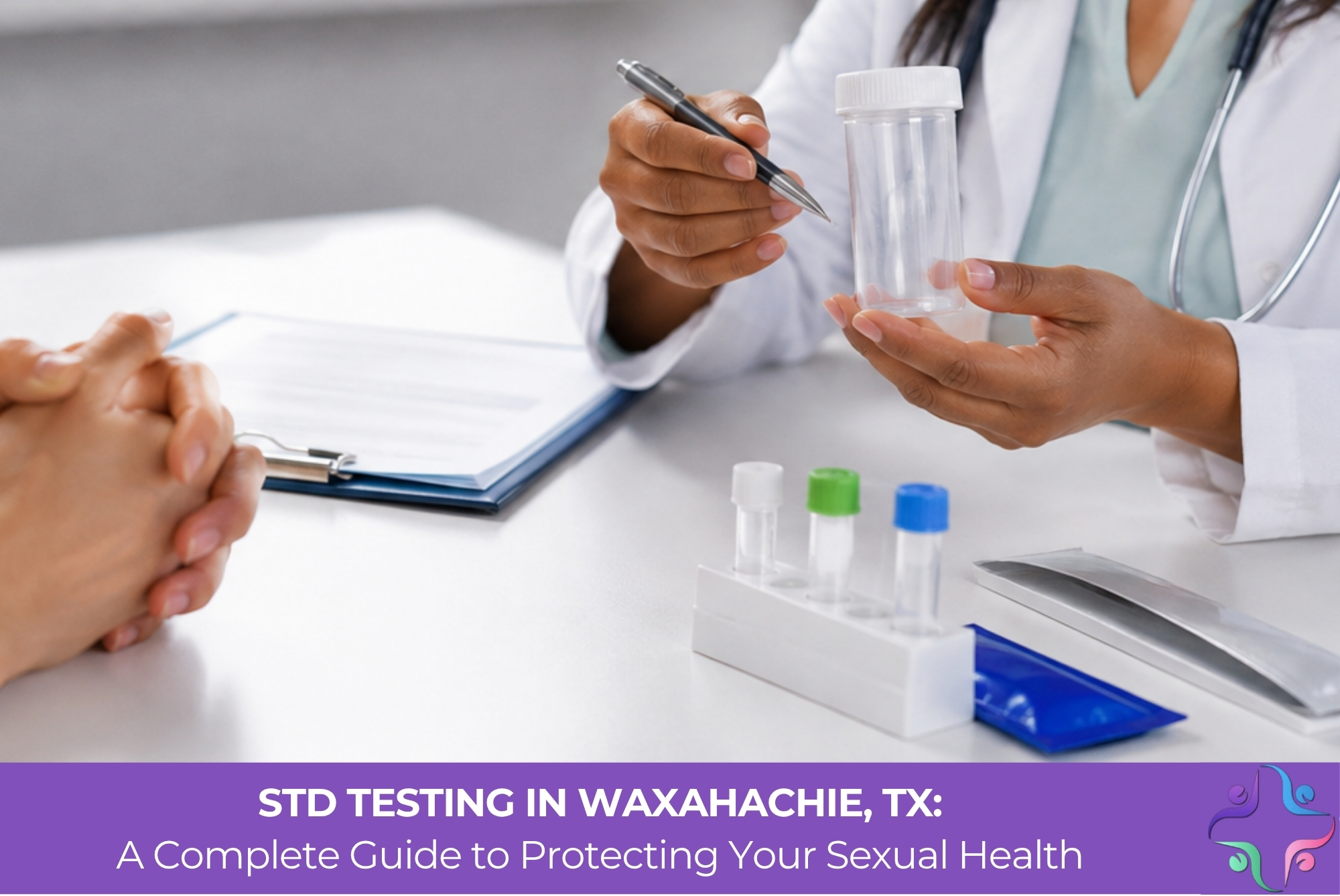
 Sexually transmitted infections (STIs), often referred to as sexually transmitted diseases (STDs), are common health concerns that can affect sexually active people of many ages and backgrounds. Because many infections cause few or no noticeable symptoms, testing is an important part of protecting your health and the health of your partner or partners.
At Trinity Salem Family Health in Waxahachie, Texas, patients can receive STD testing based on their symptoms, sexual history, potential exposures, and individual risk factors. Testing may involve blood, urine, or swab samples depending on which infections need to be evaluated.
Understanding when to get tested, what testing involves, and what your results mean can make it easier to take an informed and proactive approach to your sexual health.
Why STD Testing Is an Important Part of Preventive Healthcare
One of the most important things to understand about sexually transmitted infections is that symptoms are not always present.
A person can have an STI without feeling sick or noticing anything unusual. As a result, relying on symptoms alone is not a reliable way to determine your STI status. Testing can identify infections that otherwise might remain undetected.
Knowing your status can also help you seek appropriate treatment when necessary and reduce the possibility of unknowingly transmitting an infection to someone else.
Some untreated infections can lead to significant complications. Depending on the infection and the individual, potential complications may include pelvic inflammatory disease, fertility problems, pregnancy complications, and other long-term health concerns.
Regular conversations with a healthcare provider can help determine which tests are appropriate for you and how frequently you should be screened.
When Should You Consider STD Testing?
There is no single testing schedule that is appropriate for every patient. Testing recommendations depend on factors such as age, anatomy, pregnancy status, sexual practices, number of partners, previous infections, and potential exposures.
You may want to discuss STD testing with a healthcare provider if you:
- Have a new sexual partner
- Have multiple sexual partners
- Have had sex without a condom or other appropriate barrier protection
- Have a partner who has tested positive for an STI
- Develop symptoms that could indicate an infection
- Previously had an STI
- Are unsure of your current STI status
- Want testing before beginning a sexual relationship with a new partner
- Are pregnant or planning a pregnancy
- Have specific risk factors that make more frequent screening appropriate
Testing is not an indication that someone has done something wrong. It is a routine component of preventive healthcare for many sexually active people.
Can You Have an STD Without Symptoms?
Yes. Many sexually transmitted infections can occur without noticeable symptoms.
This is one reason testing is so important. Someone may feel completely healthy while still having an infection that can potentially be transmitted to another person.
When symptoms do occur, their type and severity can vary considerably depending on the infection.
Possible symptoms can include:
- Unusual vaginal or penile discharge
- Burning or discomfort during urination
- Genital sores, blisters, bumps, or warts
- Genital itching or irritation
- Pelvic or lower abdominal discomfort
- Pain during sexual activity
- Unusual genital swelling
- Flu-like symptoms associated with certain infections
Having one of these symptoms does not automatically mean that you have an STI. Many other medical conditions can cause similar symptoms. An evaluation and appropriate testing can help determine the cause.
What STDs Can Be Tested For?
STD testing is not necessarily one universal test. Different infections may require different specimens and testing methods.
Depending on your history, symptoms, anatomy, and possible exposures, a healthcare provider may discuss testing for infections such as:
- Chlamydia
- Gonorrhea
- Syphilis
- HIV
- Trichomoniasis
- Hepatitis B
- Herpes simplex virus (HSV)
- Human papillomavirus (HPV)
- Mycoplasma genitalium
Not every patient needs testing for every infection. A healthcare provider can recommend appropriate testing based on your individual circumstances.
What Happens During an STD Test?
STD testing is generally straightforward, although the exact process depends on the infections being evaluated.
Before testing, your healthcare provider may ask questions about your health, symptoms, sexual history, recent partners, and potential exposures. Providing accurate information helps your provider select the appropriate tests and collection sites.
Testing may involve one or more types of samples.
Blood Tests
Blood testing may be used to evaluate certain infections, including HIV and syphilis, as well as some forms of viral hepatitis.
Urine Tests
A urine sample can be used for certain STI tests, including testing for infections such as chlamydia and gonorrhea in appropriate circumstances.
Swab Tests
Depending on sexual practices, symptoms, and areas of possible exposure, a swab may be collected from the genital area, throat, rectum, a sore, or another relevant location.
Testing the appropriate anatomical site matters because some infections can occur in the throat or rectum without causing a genital infection.
Examination of Sores or Lesions
If you have a genital sore, blister, or other lesion, your healthcare provider may examine the area and determine whether a sample should be collected for laboratory analysis.
Which STD Tests Do I Need?
The appropriate tests depend on your individual risk factors and exposure history.
For example, a person who has had oral or anal sexual contact may require testing from different anatomical sites than someone who has only had vaginal sexual contact. Similarly, a known exposure to a particular infection may influence which tests are ordered.
For this reason, asking for an “STD test” without discussing your sexual history may not always result in testing for every relevant infection or anatomical site.
An open conversation with your healthcare provider can help ensure that testing is appropriate for your circumstances.
How Often Should You Get Tested for STDs?
Testing frequency varies from person to person.
Current public-health recommendations include annual chlamydia and gonorrhea screening for sexually active women younger than 25 and for certain women age 25 and older who have increased risk factors. Sexually active men who have sex with men are generally advised to receive at least annual screening for syphilis, chlamydia, and gonorrhea, with more frequent screening potentially appropriate for people at increased risk.
HIV testing is also an important component of preventive care. Screening recommendations vary according to age, pregnancy status, sexual practices, and individual risk factors.
Rather than assuming that one testing interval applies to everyone, discuss your circumstances with a healthcare professional who can recommend an appropriate screening schedule.
Should I Get Tested After a New Sexual Partner?
A new sexual partner is a good reason to discuss STI testing.
Partners may choose to be tested before beginning a sexual relationship and share their results with one another. Testing can provide useful information, but timing matters because some infections cannot always be detected immediately after exposure.
If you are concerned about a recent exposure, tell your healthcare provider when it occurred. They can help determine which tests may be useful now and whether repeat testing should be considered later.
Should I Get Tested If My Partner Has an STD?
Yes, you should contact a healthcare provider if a current or recent sexual partner tells you they have been diagnosed with an STI.
Your provider can determine which testing is appropriate and whether treatment or other measures should be considered based on the infection and your exposure.
Avoid assuming that the absence of symptoms means you were not infected.
STD Testing During Pregnancy
STI screening can be particularly important during pregnancy because certain infections can affect both the pregnant patient and developing baby.
Testing recommendations during pregnancy vary according to the infection and individual risk factors. Screening for infections including HIV, syphilis, hepatitis B, and hepatitis C may be recommended early in pregnancy, while some patients also require chlamydia and gonorrhea testing or repeat testing later in pregnancy.
Patients who are pregnant, think they may be pregnant, or are planning pregnancy should discuss appropriate screening with their healthcare provider.
What Happens If an STD Test Is Positive?
A positive test result is the beginning of a healthcare plan, not a reason to panic.
The next steps depend on the infection. Some bacterial and parasitic STIs can be treated with appropriate medications. Viral infections may require monitoring, symptom management, antiviral treatment, or other ongoing care.
Your healthcare provider may also recommend that recent sexual partners receive testing and, when appropriate, treatment.
Depending on the infection, repeat testing may be recommended after treatment. Follow your healthcare provider’s instructions regarding medication, follow-up testing, and when it is appropriate to resume sexual activity.
Can STDs Be Prevented?
No prevention strategy other than avoiding sexual contact eliminates every possibility of acquiring an STI, but there are several ways to substantially reduce risk.
Preventive strategies can include:
- Using condoms correctly and consistently
- Using appropriate barriers during oral sex
- Limiting the number of sexual partners
- Discussing STI testing and results with partners
- Getting tested according to recommended schedules
- Receiving recommended vaccinations, including HPV and hepatitis B vaccines when appropriate
- Avoiding sexual contact when you or your partner have unexplained sores, discharge, or other symptoms
- Following medical recommendations after a known exposure
Condoms can significantly reduce the risk of many infections when used correctly, but they do not provide complete protection against infections that can spread through skin-to-skin contact.
STD Testing and Sexual Health in Waxahachie, TX
Access to testing can make it easier for patients to take an active role in their sexual and reproductive health.
Trinity Salem Family Health provides STD testing in Waxahachie, TX as part of its broader primary care services. Testing is individualized according to factors such as symptoms, potential exposure, and the type of infection being considered.
Patients who are uncertain whether they need testing can discuss their concerns with a healthcare provider rather than waiting for symptoms to appear.
Why Choose Trinity Salem Family Health for STD Testing?
Trinity Salem Family Health provides patient-centered primary healthcare to individuals and families in Waxahachie and surrounding communities.
The practice offers STD testing along with acute sick visits, annual wellness exams, immunizations, chronic disease management, women’s health services, sports physicals, and other primary care services.
When you visit for STD testing, your healthcare provider can evaluate your individual circumstances and determine which samples or tests may be appropriate. Depending on the suspected infection, testing may involve blood, urine, or swab samples.
Sexual health is part of overall health. Seeking testing when appropriate can provide answers, facilitate treatment when needed, and help protect both you and your partners.
Frequently Asked Questions About STD Testing
Can I have an STD even if I feel completely healthy?
Yes. Many sexually transmitted infections cause no symptoms or only mild symptoms. Testing may be the only way to determine whether you have certain infections.
How do I know which STD tests I need?
Your healthcare provider can make recommendations based on factors such as your age, anatomy, symptoms, sexual practices, number of partners, pregnancy status, previous infections, and potential exposures.
Does one STD test check for everything?
No. There is no single test that automatically identifies every STI. Different infections require different testing methods, and some patients may need samples collected from more than one anatomical site.
What samples are used for STD testing?
Depending on the infection, testing may involve blood, urine, genital swabs, throat swabs, rectal swabs, or samples taken from sores or lesions.
Can I get tested if I don’t have symptoms?
Yes. In fact, screening people without symptoms is an important part of STI prevention because many infections can be asymptomatic.
Should I get tested after unprotected sex?
It is reasonable to contact a healthcare provider after a potential exposure. The appropriate test and timing depend on the type of exposure and infection being considered. Some infections have a period after exposure when testing may not yet detect them, so repeat testing may sometimes be necessary.
How soon after exposure should I get tested?
There is no single waiting period that applies to every STI. Different infections and tests have different detection windows. Tell your healthcare provider what happened and when the exposure occurred so they can recommend an appropriate testing timeline.
Should both partners get tested?
Testing can be beneficial for both partners, particularly before beginning a new sexual relationship or when one partner has received a positive STI result. If an infection is diagnosed, a healthcare provider can advise which partners should be notified, tested, or treated.
Can condoms prevent all STDs?
No. Correct and consistent condom use reduces the risk of many sexually transmitted infections, but it does not eliminate risk. Some infections can spread through contact with skin that a condom does not cover.
Can oral sex transmit STDs?
Yes. Some sexually transmitted infections can be transmitted through oral sex. Depending on your sexual practices and possible exposure, your healthcare provider may recommend throat testing in addition to other tests.
Can STDs be transmitted through anal sex?
Yes. STIs can be transmitted through anal sexual contact. Depending on exposure, rectal testing may be appropriate for infections such as gonorrhea or chlamydia.
Does birth control protect against STDs?
Most contraceptive methods—including birth control pills, IUDs, implants, patches, and injections—do not protect against STIs. Condoms can reduce the risk of many STIs when used correctly and consistently.
Do pregnant patients need STD testing?
STI screening is an important component of prenatal healthcare. Recommended tests depend on the stage of pregnancy and individual risk factors. Pregnant patients should discuss STI screening with their prenatal healthcare provider.
What if my STD test is positive?
Your healthcare provider can explain the result, discuss treatment or management, and provide guidance about partners and follow-up testing. Treatment depends on the specific infection.
Can I get the same STD more than once?
Yes. Treatment for an infection does not necessarily provide lasting immunity. Reinfection can occur if you are exposed again, which is one reason partner testing, appropriate treatment, prevention, and follow-up are important.
Should I get retested after STD treatment?
Sometimes. Retesting recommendations vary according to the infection. For example, follow-up testing after treatment is recommended in certain circumstances for infections such as chlamydia and gonorrhea. Follow the specific schedule recommended by your healthcare provider.
Is STD testing part of routine healthcare?
For many people, yes. STI screening can be an important component of preventive healthcare. How often you should be tested depends on your age, sexual history, pregnancy status, sexual practices, and other individual risk factors.
Where can I get STD testing in Waxahachie, Texas?
Trinity Salem Family Health offers STD testing at its Waxahachie clinic at 1007 Legacy Ranch Rd., Suite 102, Waxahachie, TX 75165. Patients can call (972) 666-8111 or request an appointment online.
Take a Proactive Approach to Your Sexual Health
You do not need to wait until symptoms develop to discuss STD testing.
If you have a new partner, have experienced a possible exposure, notice unusual symptoms, have been told that a partner has an STI, or simply do not know your current status, testing can provide valuable information about your health.
Trinity Salem Family Health provides STD testing in Waxahachie, TX and can help determine which tests are appropriate based on your individual circumstances.
Schedule an appointment to discuss your sexual health, potential risk factors, symptoms, and appropriate testing options.
Contact Information
Trinity Salem Family Health
1007 Legacy Ranch Rd., Suite 102
Waxahachie, TX 75165
Phone: (972) 666-8111
Website: trinitysalemfamilyhealth.com
Make an Appointment: trinitysalemfamilyhealth.com/appointments