
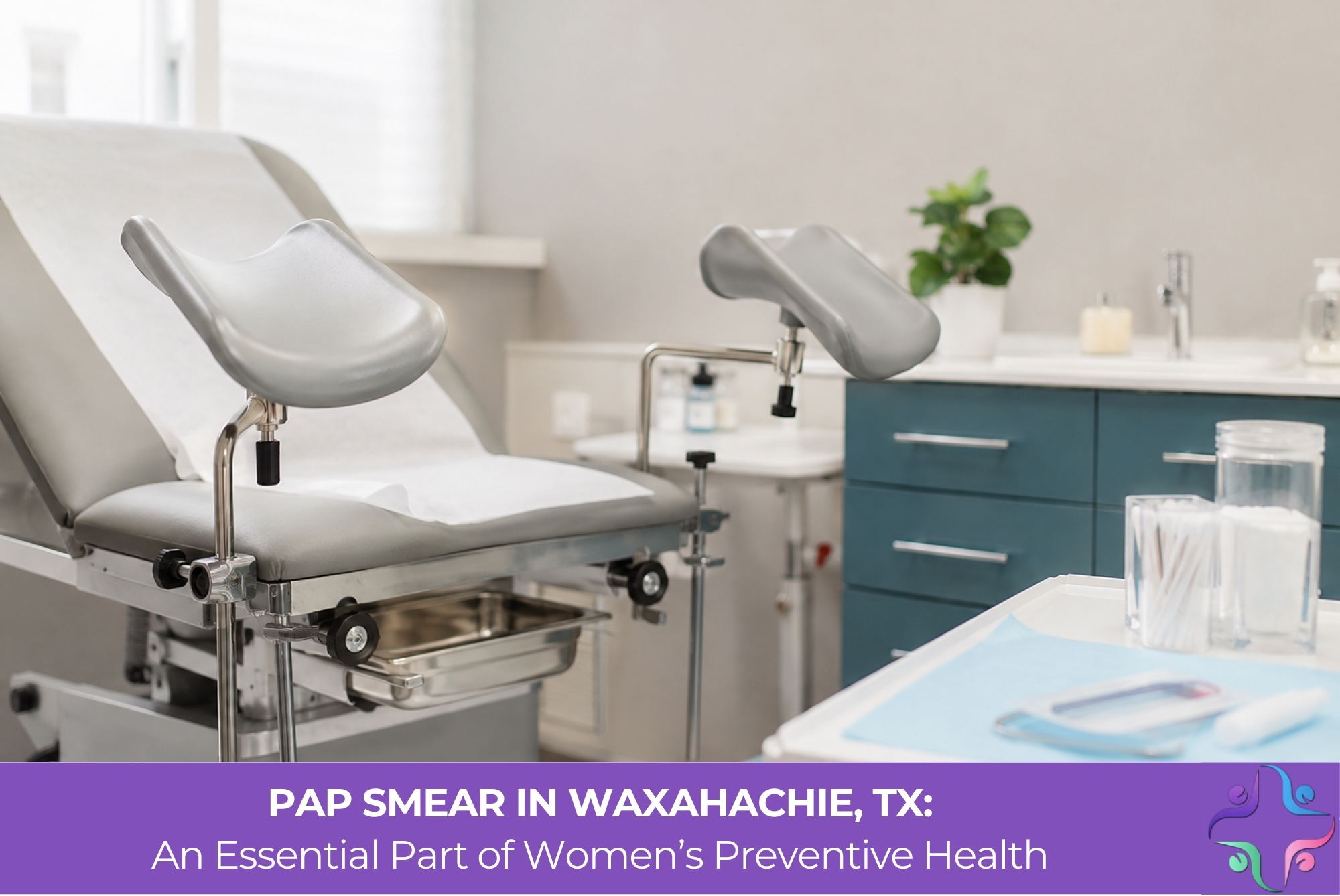
 A Pap smear is an important preventive health screening that can identify abnormal cervical cell changes before they develop into cervical cancer. For women in Waxahachie, Texas, staying current with recommended cervical cancer screening can be an important part of maintaining long-term reproductive and overall health.
At Trinity Salem Family Health, women’s health services include preventive care and health screenings tailored to each patient’s age, medical history, and individual risk factors. Pap smears are among the cervical cancer screening services available in the office.
Understanding what a Pap smear tests for, when screening may be recommended, what happens during an appointment, and what results can mean can help patients feel more informed and confident about their preventive care.
What Is a Pap Smear?
A Pap smear, also called a Pap test or cervical cytology, is a cervical cancer screening test. During the test, a healthcare professional collects a small sample of cells from the cervix. The sample is then examined for abnormal cellular changes.
The cervix is the lower portion of the uterus that opens into the vagina. Changes in cervical cells can sometimes occur without noticeable symptoms, which is one reason routine screening is important.
A Pap smear does not diagnose cervical cancer by itself. Instead, it helps identify abnormal cervical cells that may require monitoring, additional testing, or treatment.
Why Are Pap Smears Important?
Cervical cancer often develops gradually. Before cancer develops, cells of the cervix may undergo precancerous changes that can potentially be identified through appropriate screening.
Detecting these changes provides an opportunity for additional evaluation and, when necessary, treatment before the condition progresses.
Screening is particularly important because precancerous cervical changes often do not cause symptoms. Feeling healthy does not necessarily mean that screening is unnecessary.
Routine cervical cancer screening therefore represents preventive medicine in action: looking for potentially important changes before they cause noticeable health problems.
What Does a Pap Smear Test For?
A Pap smear looks for abnormal cells in the cervix. These cellular abnormalities can range from minor changes that may resolve on their own to more significant precancerous changes requiring additional evaluation.
Pap testing is different from HPV testing.
A Pap test examines cervical cells for abnormal changes. An HPV test looks for high-risk types of human papillomavirus associated with cervical cancer.
Depending on a patient’s age, health history, risk factors, and current screening recommendations, cervical cancer screening may involve cervical cytology, high-risk HPV testing, or a combination of testing.
What Is the Connection Between HPV and Cervical Cancer?
Human papillomavirus, commonly called HPV, is a group of viruses. Certain high-risk types of HPV are strongly associated with the development of cervical cancer.
HPV infections are common, and many infections resolve without causing serious health problems. However, persistent infection with certain high-risk HPV types can contribute to cellular changes that may eventually become cervical cancer.
This relationship is why HPV testing has become an important component of modern cervical cancer screening.
Current Cervical Cancer Screening Recommendations
Cervical cancer screening recommendations have evolved as research and screening technologies have advanced.
For average-risk individuals ages 21–29, current American College of Obstetricians and Gynecologists (ACOG) guidance recommends cervical cytology, or a Pap test, every three years.
For average-risk individuals ages 30–65, ACOG’s 2026 guidance identifies clinician-collected primary high-risk HPV screening every five years as the preferred screening method. Co-testing with HPV testing and cervical cytology every five years is an acceptable alternative when primary HPV screening is unavailable or selected after counseling. Cervical cytology alone may also be considered in certain circumstances.
Screening recommendations can be different for patients with particular medical histories or risk factors. Your healthcare provider can determine which screening method and interval are appropriate for you based on current guidelines and your individual health history.
Do Women Over Age 65 Need Pap Smears?
Not everyone needs lifelong routine cervical cancer screening.
According to current ACOG guidance, routine cervical cancer screening generally is not indicated after age 65 for average-risk patients who have received adequate prior screening.
However, screening may need to continue when adequate previous screening has not occurred or when a patient has certain risk factors or relevant medical history.
Because individual circumstances differ, patients approaching or older than age 65 should discuss their screening history with a healthcare professional rather than simply stopping screening based on age alone.
Do You Need a Pap Smear After a Hysterectomy?
It depends on the type of hysterectomy and your medical history.
Current guidelines generally do not recommend routine cervical cancer screening for average-risk patients who have undergone a hysterectomy that included removal of the cervix and who do not have a history of cervical cancer or certain high-grade precancerous cervical lesions.
If the cervix remains, screening may still be appropriate.
Patients who are uncertain whether their cervix was removed or whether their medical history changes their screening needs should discuss this with their healthcare provider.
Who May Need an Individualized Cervical Cancer Screening Schedule?
Routine recommendations are intended for people at average risk. Some patients need an individualized screening or surveillance plan.
This can include people with certain immune system conditions, a history of significant cervical abnormalities or cervical cancer, or specific previous exposures or treatments.
Your previous Pap and HPV results also matter. An abnormal result can change when your next test should occur and what type of follow-up is recommended.
For this reason, cervical cancer screening should be considered in the context of your complete medical history rather than simply following a calendar.
What Happens During a Pap Smear?
A Pap smear is typically performed during an office visit and usually takes only a short amount of time.
You will generally lie on an examination table while a healthcare professional carefully inserts a speculum into the vagina. The speculum allows the clinician to see the cervix.
A small brush or other sampling instrument is then used to collect cells from the cervix. Those cells are sent to a laboratory for evaluation.
The collection itself is generally brief. Some patients experience pressure or temporary discomfort during the examination.
If you are nervous or have previously experienced discomfort with pelvic examinations, tell your healthcare professional. Open communication can help your provider understand your concerns and make the examination as comfortable as possible.
Is a Pap Smear the Same as a Pelvic Exam?
No. Although they may occur during the same appointment, a Pap smear and pelvic examination are not the same procedure.
A Pap smear specifically involves collecting cervical cells for cervical cancer screening.
A pelvic examination allows a healthcare professional to evaluate reproductive and pelvic structures and assess certain symptoms or health concerns.
Whether you need one or both depends on the reason for your visit and your individual healthcare needs.
Is a Pap Smear the Same as an STD Test?
No. A Pap smear is primarily a cervical cancer screening test and should not be considered a comprehensive sexually transmitted disease (STD) or sexually transmitted infection (STI) screening.
If you want STI testing, discuss it directly with your healthcare provider. Appropriate tests can be recommended based on your age, health history, sexual history, symptoms, and risk factors.
Trinity Salem Family Health lists both Pap smears and STD testing among its women’s health services.
How Should You Prepare for a Pap Smear?
When scheduling your appointment, ask whether there are specific preparation instructions you should follow.
You should also tell your healthcare provider about relevant information such as previous abnormal Pap or HPV results, previous cervical procedures, pregnancy, hysterectomy history, unusual vaginal bleeding, pelvic symptoms, or other gynecologic concerns.
Bringing information about previous cervical screening can also be useful, particularly if those tests were performed by another healthcare organization.
What Does an Abnormal Pap Smear Mean?
An abnormal Pap smear does not automatically mean you have cervical cancer.
Abnormal results indicate that changes were identified in cervical cells. The significance of those changes varies considerably.
Some abnormalities are minor and may resolve without treatment. Other findings may require repeat testing, HPV testing, colposcopy, biopsy, or another form of follow-up.
The appropriate next step depends on factors including the specific laboratory result, HPV status, age, previous screening results, and medical history.
If your Pap smear is abnormal, following the recommended evaluation schedule is important.
What Is a Colposcopy?
A colposcopy is a procedure that allows a healthcare professional to examine the cervix more closely using magnification.
It may be recommended following certain abnormal cervical cancer screening results. During the procedure, small tissue samples called biopsies may be collected if an area requires further evaluation.
An abnormal screening result does not mean every patient will need a colposcopy. Follow-up recommendations are based on the specific findings and the patient’s individual risk.
Can You Still Need Cervical Cancer Screening After HPV Vaccination?
Yes. HPV vaccination is an important preventive measure, but vaccination does not eliminate the need for recommended cervical cancer screening.
Patients who have received the HPV vaccine should continue to follow the cervical cancer screening schedule recommended by their healthcare provider.
Vaccination and screening work as complementary approaches to cervical cancer prevention.
Why Preventive Women’s Healthcare Goes Beyond a Pap Smear
Cervical cancer screening is only one component of comprehensive women’s preventive healthcare.
A women’s health visit can provide an opportunity to discuss reproductive health, contraception, menstrual concerns, menopause, sexual health, mental health, nutrition, chronic disease risks, and age-appropriate preventive screenings.
Trinity Salem Family Health provides women’s health services that may include pelvic and breast exams, Pap smears, birth control, STD testing, immunizations, weight management, mental healthcare, menopause management, hormone replacement therapy, chronic disease management, and other health screenings.
The practice also evaluates patients for appropriate preventive screenings based on age and individual risk.
Pap Smears and Women’s Health Services in Waxahachie, TX
Having an established healthcare provider can make it easier to keep track of preventive screenings over time.
At Trinity Salem Family Health in Waxahachie, women’s healthcare is approached as part of whole-person preventive medicine. This means looking beyond a single screening test and considering factors such as age, medical history, lifestyle, chronic disease risks, reproductive health, and individual concerns.
If you are unsure when you last had cervical cancer screening, whether you are due for a Pap smear, or which screening option is appropriate for you, an appointment is an opportunity to review your history and develop an individualized preventive care plan.
Frequently Asked Questions About Pap Smears
What is a Pap smear?
A Pap smear, or Pap test, is a cervical cancer screening procedure that collects cells from the cervix so they can be evaluated for abnormal changes.
What does a Pap smear detect?
A Pap smear detects abnormal cervical cell changes. Some cellular abnormalities may be precancerous and require monitoring or additional evaluation.
Does a Pap smear test for HPV?
A Pap test and HPV test are different tests. A Pap test looks for abnormal cervical cells, while an HPV test looks for high-risk HPV types associated with cervical cancer. Depending on the screening strategy, the tests may sometimes be performed together.
Does an abnormal Pap smear mean cervical cancer?
No. An abnormal Pap result does not automatically mean cervical cancer. Many abnormal results represent minor or precancerous changes. Your healthcare provider will recommend appropriate follow-up based on the specific result and your history.
At what age should cervical cancer screening begin?
For average-risk individuals, current ACOG guidance recommends beginning cervical cancer screening at age 21 with cervical cytology every three years through age 29.
How often should I get a Pap smear?
The appropriate interval depends on age, the screening method being used, previous results, and individual risk factors. For average-risk patients ages 21–29, cervical cytology is recommended every three years. Different screening strategies are available for patients ages 30–65.
Can I get a Pap smear every year?
More frequent screening is not necessarily better for an average-risk patient. Cervical cancer screening should generally follow evidence-based intervals unless your medical history or previous results indicate that closer surveillance is appropriate.
Do I need a Pap smear if I received the HPV vaccine?
Recommended cervical cancer screening is still important after HPV vaccination.
Do I need a Pap smear if I am not sexually active?
Screening recommendations are generally based on factors such as age, medical history, risk, previous screening results, and whether a cervix is present—not simply current sexual activity. Discuss your circumstances with your healthcare provider.
Do I need cervical cancer screening after menopause?
Possibly. Menopause itself does not automatically end the need for cervical cancer screening. Age, prior screening results, medical history, and risk factors determine when screening can appropriately stop.
Do I need a Pap smear after a hysterectomy?
It depends on whether the cervix was removed and whether you have a history of cervical cancer or significant precancerous cervical changes. Your healthcare provider can review your surgical and screening history.
Is a Pap smear painful?
Some patients experience temporary pressure or discomfort, but the cervical cell collection is usually brief. Tell your provider if you experience pain or have concerns about pelvic examinations.
How long does a Pap smear take?
Collecting the cervical sample generally takes only a short portion of the overall appointment.
Can a Pap smear diagnose an STI?
A Pap smear should not be considered a comprehensive STI test. Separate STI testing may be appropriate depending on your individual circumstances.
What happens if my Pap smear is abnormal?
Your next step depends on the type of abnormality, HPV results, previous screening history, age, and other risk factors. Follow-up could involve repeat testing, additional HPV testing, colposcopy, or other evaluation.
Where can I get a Pap smear in Waxahachie, TX?
Trinity Salem Family Health provides Pap smears as part of its women’s health and cervical cancer screening services in Waxahachie, Texas. Patients can contact the practice or request an appointment online.
Take a Proactive Approach to Your Cervical Health
Preventive healthcare is most effective when it is personalized and consistent. Cervical cancer screening can identify changes before they progress into more serious disease, making appropriate screening an important part of long-term women’s health.
Whether you are due for a Pap smear, uncertain about your previous screening date, have questions about HPV testing, or simply want to stay current with preventive care, Trinity Salem Family Health can help you understand the screenings appropriate for your age, history, and health needs.
Schedule a women’s health appointment with Trinity Salem Family Health in Waxahachie, TX, to discuss Pap smears, cervical cancer screening, and your broader preventive healthcare needs.
Contact Information
Trinity Salem Family Health
1007 Legacy Ranch Rd., Suite 102
Waxahachie, TX 75165
Phone: (972) 666-8111
Website: trinitysalemfamilyhealth.com
Make an Appointment: trinitysalemfamilyhealth.com/appointments