
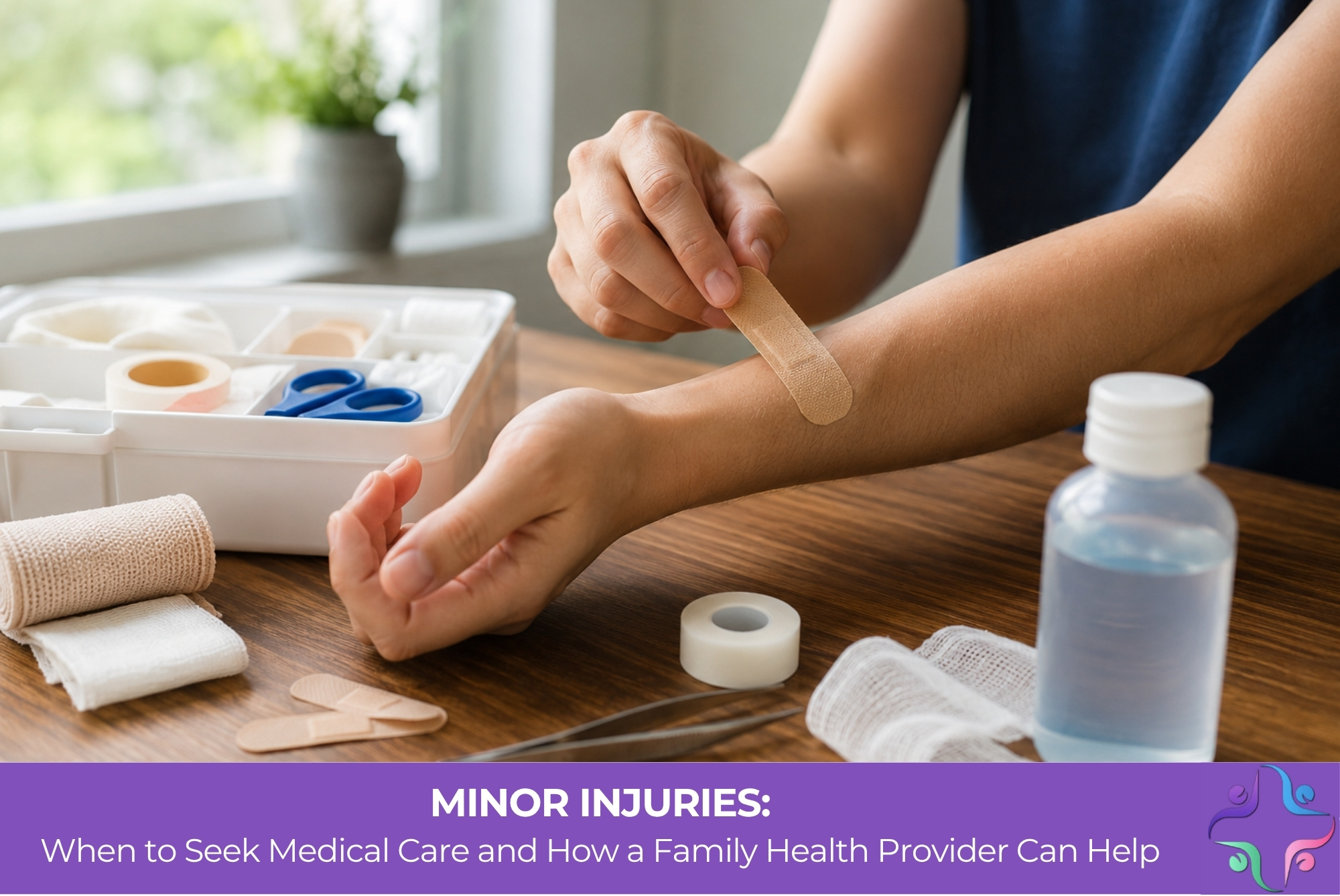
Minor injuries are a common part of everyday life. A fall at home, a cut while preparing food, a twisted ankle during exercise, or a minor burn can happen unexpectedly. Although many mild injuries can initially be managed with basic first aid, some require professional evaluation to promote proper healing and rule out complications.
Trinity Salem Family Health in Waxahachie, Texas, provides evaluation and treatment for many common minor injuries. Understanding when home care may be appropriate and when to make an appointment with a healthcare provider can help patients make informed decisions about their health.
What Is Considered a Minor Injury?
A minor injury generally refers to an injury that does not appear immediately life-threatening and does not cause severe or extensive damage. Minor injuries can affect the skin, muscles, joints, and other soft tissues.
Even an injury that initially appears minor can sometimes be more significant than expected. Pain that becomes worse, swelling that does not improve, difficulty moving an injured area, or signs of infection are reasons to consider a medical evaluation.
Common Types of Minor Injuries
Family health providers can evaluate many everyday injuries. Depending on the nature and severity of the injury, these may include minor cuts and scrapes, mild burns, bruises, sprains, strains, minor sports injuries, and other uncomplicated injuries.
An evaluation can help determine the extent of an injury and whether additional treatment, testing, or referral is appropriate.
Cuts and Scrapes
Cuts and scrapes are among the most frequent minor injuries. Small superficial wounds can often be cleaned with soap and water and protected with a clean dressing.
Medical attention may be appropriate when a wound is deep, has separated edges, contains debris that cannot easily be removed, continues bleeding despite sustained direct pressure, was caused by an animal or human bite, or begins showing possible signs of infection.
Signs That a Wound May Be Infected
Any break in the skin can potentially become infected. Warning signs may include increasing redness, warmth, swelling, worsening pain, drainage or pus, red streaking around the wound, or fever.
Patients who notice these symptoms should contact a healthcare professional. Early assessment can help determine whether additional wound care or other treatment is necessary.
Sprains and Strains
Sprains and strains can occur during exercise, sports, household activities, falls, or sudden movements. A sprain involves ligaments, while a strain typically affects a muscle or tendon.
Symptoms can include pain, tenderness, swelling, bruising, stiffness, or reduced range of motion. Because fractures and more significant soft-tissue injuries can sometimes produce similar symptoms, persistent or substantial symptoms warrant professional evaluation.
When Should a Sprain or Strain Be Evaluated?
Consider seeking medical attention when pain is significant, swelling is pronounced, the injured area cannot be used normally, symptoms are worsening, or improvement does not occur as expected.
A healthcare provider can assess the injury and determine whether further diagnostic evaluation is needed.
Minor Burns
Minor burns may occur from brief contact with hot surfaces, liquids, steam, or other heat sources. A mild superficial burn can often be cooled under cool running water. Ice should not be placed directly on a burn because extreme cold can further damage tissue.
Medical evaluation may be needed for burns that are large, deep, blister extensively, become increasingly painful, show signs of infection, or involve sensitive areas such as the face, hands, feet, major joints, or genital area. Electrical and chemical burns also warrant prompt medical attention.
Bruises and Soft-Tissue Injuries
Bruising develops when small blood vessels beneath the skin are damaged, often after a bump, fall, or impact. Many bruises gradually improve without medical treatment.
However, unusually large or painful bruises, unexplained bruising, significant swelling, numbness, reduced movement, or bruising after a substantial injury should be evaluated.
Minor Sports Injuries
Recreational activities and organized sports can result in strains, sprains, bruises, and other musculoskeletal injuries. Continuing to exercise through significant pain can potentially aggravate an injury.
A medical evaluation can help clarify the likely type and severity of an injury and guide decisions about activity, recovery, and whether further assessment is needed before returning to normal exercise or sports.
Why Professional Evaluation of a Minor Injury Can Matter
The term “minor injury” describes the apparent severity of an injury, but appearances do not always reveal the full extent of the problem. For example, what seems like a sprain may occasionally be a fracture, and a small wound can become infected.
A healthcare professional can review how the injury occurred, examine the affected area, evaluate symptoms, and recommend an appropriate care plan. When an injury requires services beyond the scope of a primary care setting, the patient can be directed to an appropriate level of care.
First Aid for Minor Injuries at Home
Basic first aid may be useful immediately after many uncomplicated injuries. Depending on the injury, appropriate steps can include cleaning superficial wounds, applying gentle direct pressure to bleeding, protecting an injured area from further stress, or cooling a minor thermal burn with cool running water.
Home first aid is not a substitute for professional care when an injury is severe, symptoms are concerning, or the condition is getting worse rather than improving.
Tetanus Protection and Wounds
Certain wounds can create a risk of tetanus, particularly contaminated wounds, puncture wounds, and wounds involving soil or other foreign material.
Whether a tetanus booster is recommended depends on the type of wound and a person’s vaccination history. Patients who are unsure when they last received a tetanus-containing vaccine should discuss the injury and their immunization history with a healthcare professional.
When a Minor Injury May Require More Urgent Care
Some injuries should not be managed as routine minor injuries. Prompt or emergency medical attention may be appropriate for uncontrolled or severe bleeding, major trauma, suspected serious fractures, loss of consciousness, severe head injuries, difficulty breathing, severe burns, significant loss of sensation, or injuries associated with other potentially life-threatening symptoms.
When symptoms appear severe or life-threatening, call 911 or seek emergency medical care rather than waiting for a routine appointment.
Minor Injury Care in Waxahachie, TX
For individuals and families in Waxahachie and surrounding communities, having access to a family health provider can make it easier to address everyday injuries and other health concerns.
Trinity Salem Family Health evaluates a variety of health concerns, including many minor injuries. An appointment provides an opportunity to have an injury professionally assessed and receive individualized recommendations based on the patient’s symptoms, medical history, and examination.
Frequently Asked Questions About Minor Injuries
What are the most common minor injuries?
Common minor injuries include superficial cuts and scrapes, bruises, mild burns, sprains, strains, and uncomplicated sports-related injuries. The appropriate treatment depends on the location, severity, symptoms, and circumstances surrounding the injury.
Can I treat a minor injury at home?
Some mild injuries can initially be managed with basic first aid. However, professional evaluation should be considered if symptoms are significant, the injury is not improving, or there are concerns about infection, fracture, deeper tissue damage, or another complication.
How do I know whether a cut needs medical attention?
A cut should be evaluated when it is deep, gaping, contaminated, caused by a bite, continues to bleed despite sustained direct pressure, contains an embedded object, or develops signs of infection.
What are signs of infection after a cut or scrape?
Possible signs include increasing redness, warmth, swelling, worsening pain, pus or other drainage, red streaks extending from the wound, or fever. Contact a healthcare professional if these symptoms develop.
How can I tell the difference between a sprain and a fracture?
Both can cause pain, swelling, bruising, and difficulty using the affected area, making them difficult to distinguish without an examination. If there is substantial pain, deformity, inability to bear weight or use the area normally, or significant swelling, seek medical evaluation.
Should I use ice directly on an injury?
Ice should generally not be applied directly to bare skin. When cold therapy is appropriate, a cold pack can be wrapped in a thin cloth to protect the skin and used for limited periods.
What should I do immediately after a minor burn?
For a minor thermal burn, move away from the heat source and cool the affected area under cool running water. Do not apply ice directly to the burn. Seek professional care for burns that are extensive, deep, severe, or located on sensitive areas.
When should a bruise concern me?
Consider medical evaluation if bruising occurs without an apparent cause, is unusually large or painful, is accompanied by substantial swelling or reduced movement, or follows a significant injury.
Do I need a tetanus shot after an injury?
It depends on the wound and your vaccination history. Certain contaminated or puncture wounds can carry a greater tetanus risk. A healthcare professional can review the circumstances and determine whether a tetanus-containing vaccine is recommended.
Should I see a doctor if my injury is not getting better?
Yes. An injury that fails to improve as expected, becomes more painful, develops increasing swelling, or causes new symptoms should be evaluated. Persistent symptoms can indicate that the injury is more significant than initially suspected.
Can Trinity Salem Family Health evaluate minor injuries?
Trinity Salem Family Health can evaluate many common health concerns, including minor injuries. The appropriate care will depend on the nature and severity of the injury. More serious or emergency injuries may require treatment at an emergency department or another appropriate facility.
When is an injury an emergency?
Seek emergency medical care for severe or uncontrolled bleeding, major trauma, severe burns, significant head injuries, loss of consciousness, difficulty breathing, obvious severe deformity, or other potentially life-threatening symptoms. Call 911 when immediate emergency assistance is needed.
Where can I make an appointment for a minor injury in Waxahachie?
Patients can contact Trinity Salem Family Health at (972) 666-8111 or request an appointment online at trinitysalemfamilyhealth.com/appointments.
Contact Information
Trinity Salem Family Health
1007 Legacy Ranch Rd., Suite 102
Waxahachie, TX 75165
Phone: (972) 666-8111
Website: trinitysalemfamilyhealth.com
Make an Appointment: trinitysalemfamilyhealth.com/appointments