
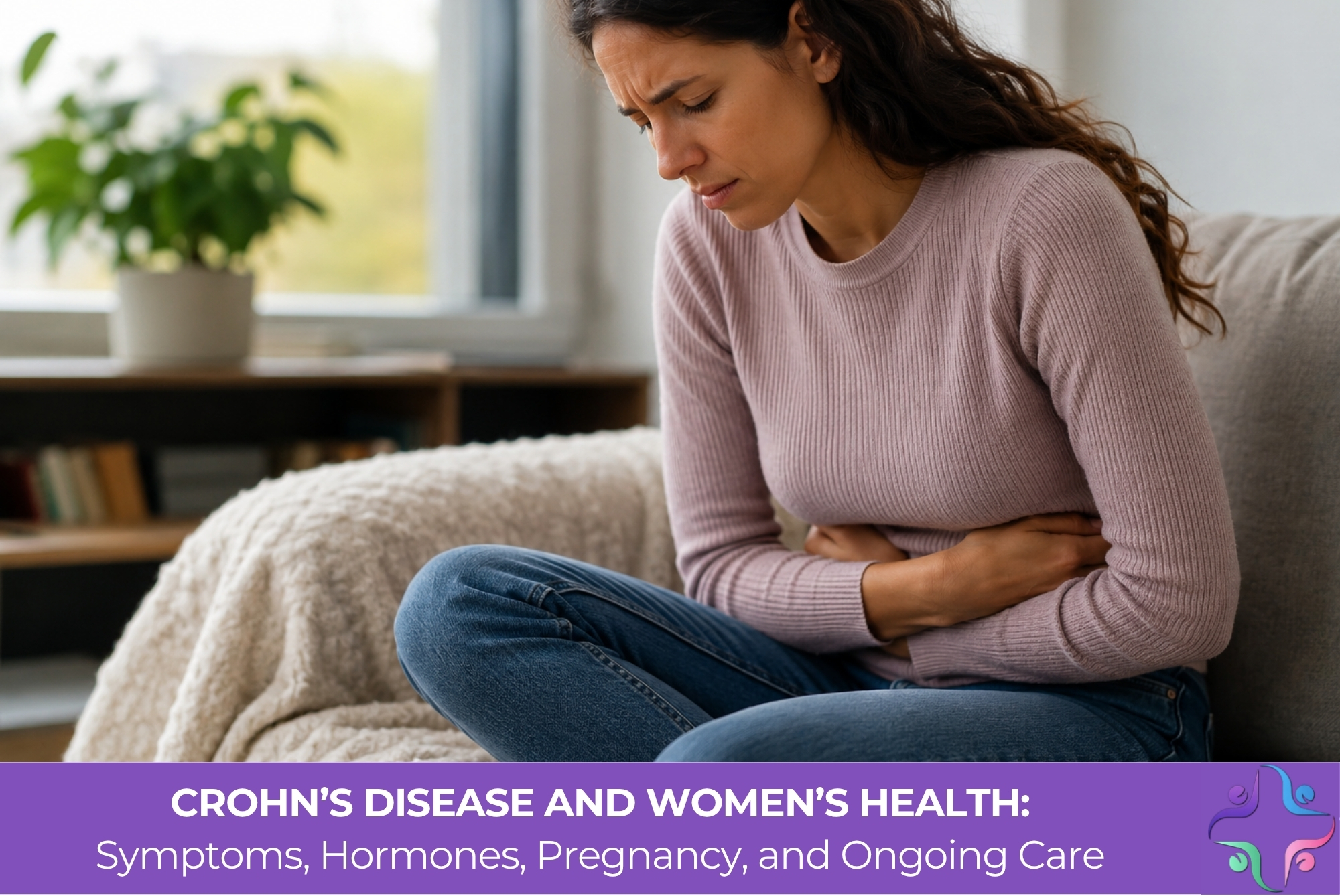
Crohn’s disease is a chronic inflammatory bowel disease (IBD) that can affect any part of the gastrointestinal tract. Although Crohn’s disease affects people of all sexes, women may experience health concerns that extend beyond digestive symptoms. Menstrual changes, reproductive health, pregnancy planning, nutritional deficiencies, bone health, and medication considerations can all become important parts of managing the condition.
At Trinity Salem Family Health in Waxahachie, Texas, women can receive primary and women’s health care designed to consider the whole person rather than focusing on an isolated symptom. For women who have Crohn’s disease—or symptoms that could indicate a gastrointestinal condition—coordinated medical care can help identify concerns, manage general health needs, and determine when evaluation by a gastroenterologist or another specialist may be appropriate.
What Is Crohn’s Disease?
Crohn’s disease is a type of inflammatory bowel disease characterized by chronic inflammation within the digestive tract. Unlike ulcerative colitis, which primarily affects the colon and rectum, Crohn’s disease can develop anywhere from the mouth to the anus. It commonly affects the end of the small intestine and the beginning of the colon.
The inflammation associated with Crohn’s disease can involve deeper layers of the intestinal wall. Symptoms and disease severity vary considerably from person to person, and periods of active symptoms, often called flares, may alternate with periods of remission.
Crohn’s disease is a chronic condition. There is currently no cure, but treatment can help control inflammation, reduce symptoms, address complications, and support long-term quality of life.
Common Crohn’s Disease Symptoms in Women
Abdominal Pain and Cramping
Persistent or recurring abdominal pain is a common symptom of Crohn’s disease. The location and intensity of discomfort can vary depending on which portion of the gastrointestinal tract is affected.
Women should discuss recurring abdominal pain with a healthcare professional rather than automatically assuming it is related to menstruation or another gynecologic issue. Digestive and reproductive conditions can sometimes cause overlapping symptoms.
Persistent Diarrhea
Frequent or prolonged diarrhea is another common Crohn’s disease symptom. Diarrhea may occur because intestinal inflammation interferes with normal digestion and absorption.
Persistent diarrhea can also contribute to dehydration and nutritional deficiencies, making medical evaluation particularly important when symptoms continue or recur.
Fatigue
Chronic inflammation, inadequate nutrition, disrupted sleep, blood loss, and anemia may all contribute to fatigue in people with Crohn’s disease.
Because fatigue is associated with many different medical conditions, a healthcare provider may evaluate other possible causes rather than attributing persistent exhaustion to Crohn’s disease alone.
Unintentional Weight Loss
Inflammation can decrease appetite and interfere with nutrient absorption. Some people may also eat less because they associate certain foods with pain, diarrhea, or other uncomfortable symptoms.
Unexplained weight loss warrants medical evaluation, especially when accompanied by persistent gastrointestinal symptoms.
Rectal Bleeding or Blood in the Stool
Inflammation within the digestive tract can sometimes result in rectal bleeding or blood in the stool. Blood may appear bright red, dark, or sometimes be difficult to detect without testing.
Blood in the stool should be discussed with a healthcare professional because many gastrointestinal conditions can cause bleeding.
Why Crohn’s Disease Can Affect Women Differently
Crohn’s Disease and Menstrual Cycles
Some women notice changes in gastrointestinal symptoms around their menstrual periods. Hormonal fluctuations and substances involved in uterine contractions may influence bowel activity, potentially contributing to diarrhea, cramping, or changes in abdominal discomfort.
Women with Crohn’s disease may therefore experience symptoms related to both their menstrual cycle and their gastrointestinal condition at the same time.
Tracking menstrual cycles alongside digestive symptoms may help patients identify patterns that can be discussed with their healthcare providers.
Irregular or Missed Periods
Chronic illness, significant weight changes, inadequate calorie intake, stress, and nutritional deficiencies can affect menstrual cycles. Women experiencing irregular periods or missed periods should discuss these changes with a healthcare provider.
Evaluation may be needed to determine whether menstrual changes are related to Crohn’s disease, nutrition, hormonal factors, pregnancy, medications, or another condition.
Iron-Deficiency Anemia
Women who menstruate already lose iron through menstrual bleeding. Crohn’s disease can create additional risks for iron deficiency because of gastrointestinal bleeding, reduced nutrient absorption, inflammation, or inadequate dietary intake.
Possible symptoms of anemia include fatigue, weakness, dizziness, headaches, shortness of breath, and difficulty concentrating.
Blood testing can help determine whether anemia is present and identify possible contributing factors.
Crohn’s Disease and Reproductive Health
Can Crohn’s Disease Affect Fertility?
Many women with well-controlled Crohn’s disease can become pregnant without significant fertility difficulties. However, active disease, nutritional problems, certain complications, or previous pelvic or abdominal surgery may affect fertility in some individuals.
Women who are considering pregnancy should discuss their health and medications with their healthcare team before attempting to conceive.
Pregnancy Planning With Crohn’s Disease
Preconception planning can be especially valuable for women living with a chronic inflammatory condition. Ideally, pregnancy planning involves reviewing disease activity, current medications, nutritional status, vaccination needs, and other medical conditions.
A healthcare team may include a primary care provider, gastroenterologist, obstetrician, and, when appropriate, a maternal-fetal medicine specialist.
Crohn’s Disease During Pregnancy
The course of Crohn’s disease during pregnancy varies. Disease activity around conception can be an important consideration, which is one reason maintaining appropriate medical care before and during pregnancy matters.
Women should not independently discontinue Crohn’s disease medication because they become pregnant or are trying to conceive. Stopping treatment can sometimes lead to disease recurrence or worsening inflammation. Medication decisions should be made with qualified healthcare professionals who can weigh potential benefits and risks for the individual patient.
Crohn’s Disease, Nutrition, and Women’s Health
Nutrient Deficiencies
Crohn’s disease may interfere with the body’s ability to absorb certain nutrients, particularly when the small intestine is affected. Dietary restrictions, reduced appetite, diarrhea, and previous intestinal surgery may further increase nutritional concerns.
Depending on an individual’s health and disease location, clinicians may evaluate levels of nutrients such as iron, vitamin B12, folate, and vitamin D.
Supplementation should be individualized. Taking large amounts of vitamins or minerals without medical guidance may not correct the underlying problem and can sometimes cause unwanted effects.
Bone Health
Women with Crohn’s disease may have additional risk factors for reduced bone density. Chronic inflammation, vitamin D or calcium deficiencies, low body weight, menopause, and prolonged exposure to corticosteroid medications can all affect bone health.
Healthcare providers may recommend strategies to support bone health and determine whether bone-density screening is appropriate based on a patient’s individual risk factors.
Crohn’s Disease and Sexual Health
Crohn’s disease can sometimes affect sexual well-being. Abdominal pain, fatigue, diarrhea, body-image concerns, fistulas, previous surgery, and anxiety about urgent bowel symptoms may affect intimacy.
These concerns are legitimate healthcare topics. Women experiencing pain during intercourse, pelvic discomfort, significant changes in sexual function, or other reproductive symptoms should discuss them with a healthcare professional so that gastrointestinal, gynecologic, and other possible causes can be evaluated.
How Is Crohn’s Disease Diagnosed?
Medical History and Physical Examination
Evaluation often begins with a detailed discussion of symptoms, including when they started, their frequency and severity, family medical history, medications, diet, weight changes, menstrual history when relevant, and other health concerns.
A physical examination may help identify abdominal tenderness or other signs requiring further evaluation.
Blood and Stool Testing
Blood tests may be used to look for anemia, inflammation, nutritional deficiencies, infection, or other abnormalities.
Stool testing can also help clinicians evaluate inflammation or rule out certain infections and other causes of gastrointestinal symptoms.
Endoscopy and Imaging
When Crohn’s disease is suspected, a gastroenterologist may use procedures such as colonoscopy or upper endoscopy to examine portions of the digestive tract. Biopsies may be collected for laboratory examination.
Imaging studies may also be used to evaluate areas of the gastrointestinal tract that cannot be fully assessed through conventional endoscopy or to investigate potential complications.
No single symptom establishes a Crohn’s disease diagnosis. A comprehensive medical evaluation is necessary because several gastrointestinal and gynecologic conditions can produce similar symptoms.
How Is Crohn’s Disease Treated?
Medications
Treatment is individualized according to disease location, severity, previous treatment response, complications, and other health factors.
Depending on the circumstances, treatment may involve anti-inflammatory medicines, immunomodulators, biologic therapies, targeted medications, or other therapies. Medication management for Crohn’s disease is typically directed by a gastroenterology specialist.
Nutritional Support
Nutrition is an important part of comprehensive Crohn’s disease care. However, there is no single diet that is appropriate for every person with Crohn’s disease.
A healthcare professional or registered dietitian can help identify nutritional deficiencies and develop an eating plan that accounts for individual symptoms, disease activity, and nutritional needs.
Surgery
Some people with Crohn’s disease eventually require surgery to address complications such as intestinal narrowing, obstruction, fistulas, abscesses, or severely affected sections of bowel.
Surgery can treat specific complications but does not eliminate the underlying tendency for Crohn’s disease to cause inflammation elsewhere in the gastrointestinal tract.
The Role of Primary and Women’s Health Care
Coordinating Care Across Different Health Needs
Crohn’s disease often requires gastroenterology care, but women living with the condition also need routine preventive and primary healthcare.
A primary care provider can help monitor general health, evaluate new symptoms, identify nutritional or metabolic concerns, review medications, provide preventive care, and coordinate referrals when specialist treatment is necessary.
Women’s healthcare may also address menstrual changes, contraception, pregnancy planning, cervical cancer screening, menopause, bone health, and other concerns that may intersect with chronic gastrointestinal disease.
Looking Beyond Digestive Symptoms
Symptoms such as fatigue, pelvic pain, menstrual irregularities, anemia, or weight changes should not necessarily be attributed to a single condition.
A broader evaluation can help identify whether Crohn’s disease, a gynecologic condition, nutritional deficiency, medication effect, endocrine issue, or another medical problem may be contributing.
When Should You See a Healthcare Provider?
Women should consider medical evaluation for persistent or recurring gastrointestinal symptoms, particularly when symptoms interfere with normal activities or are accompanied by other health changes.
Contact a healthcare professional if you experience persistent diarrhea, recurring abdominal pain, unexplained weight loss, ongoing fatigue, changes in bowel habits, recurrent fever, menstrual changes alongside significant gastrointestinal symptoms, or suspected nutritional deficiencies.
Seek prompt or emergency medical attention for severe abdominal pain, significant or persistent gastrointestinal bleeding, fainting, severe dehydration, persistent vomiting, a rigid or markedly swollen abdomen, or other rapidly worsening symptoms.
Frequently Asked Questions About Crohn’s Disease and Women’s Health
Is Crohn’s disease more common in women?
Crohn’s disease can affect both women and men. Rates can vary among populations and age groups. More importantly, women may have additional considerations involving menstruation, reproductive health, pregnancy, anemia, and bone health that should be incorporated into their medical care.
Can Crohn’s disease make periods more painful?
Some women experience increased gastrointestinal symptoms, including diarrhea and abdominal cramping, around menstruation. Distinguishing menstrual symptoms from an IBD flare can sometimes be difficult, so keeping a symptom and menstrual-cycle record may provide useful information for a healthcare provider.
Can Crohn’s disease cause irregular periods?
It can be associated with factors that influence menstruation, including chronic inflammation, significant weight changes, stress, and nutritional deficiencies. Irregular periods have many potential causes, however, so they should be medically evaluated rather than automatically attributed to Crohn’s disease.
Can Crohn’s disease cause anemia in women?
Yes. Gastrointestinal blood loss, chronic inflammation, and difficulty absorbing nutrients can contribute to anemia. Menstrual blood loss may add another source of iron loss for some women. Blood testing can help determine the type and potential cause of anemia.
Does Crohn’s disease affect fertility?
Many women with Crohn’s disease have normal fertility, particularly when their disease is well controlled. Active disease, nutritional problems, complications, and some types of previous surgery may affect fertility in certain individuals.
Can a woman with Crohn’s disease have a healthy pregnancy?
Many women with Crohn’s disease have successful pregnancies. Preconception planning and coordinated medical care are important because disease activity, nutritional health, and medications may need to be considered before and throughout pregnancy.
Should I stop my Crohn’s medication if I become pregnant?
Do not stop prescribed Crohn’s disease medication without speaking with your healthcare providers. The risks and benefits vary by medication, and uncontrolled disease can itself create health concerns. Medication decisions during pregnancy should be individualized by the appropriate clinicians.
Can Crohn’s disease cause pelvic pain?
Crohn’s disease can cause abdominal or pelvic-region discomfort, but pelvic pain has many possible gastrointestinal, urinary, reproductive, and musculoskeletal causes. Persistent or severe pelvic pain should be evaluated by a healthcare professional.
Does Crohn’s disease increase the risk of osteoporosis?
Some people with Crohn’s disease have risk factors for reduced bone density because of chronic inflammation, nutritional deficiencies, low body weight, or corticosteroid exposure. Women may have additional age- and menopause-related bone-health considerations.
What foods should women with Crohn’s disease avoid?
There is no universal list of foods that every person with Crohn’s disease must avoid. Food tolerance can vary significantly between individuals and may change depending on whether the disease is active or in remission. A clinician or registered dietitian can provide individualized nutritional guidance.
Is Crohn’s disease the same as IBS?
No. Crohn’s disease is inflammatory bowel disease and involves inflammation that can damage the gastrointestinal tract. Irritable bowel syndrome (IBS) is a different gastrointestinal disorder and does not cause the same type of intestinal inflammation or tissue injury associated with Crohn’s disease.
Because some symptoms overlap, professional evaluation is important when symptoms are persistent or concerning.
Is Crohn’s disease the same as ulcerative colitis?
No. Both are forms of inflammatory bowel disease, but they differ in how and where they affect the digestive tract. Crohn’s disease can occur anywhere along the gastrointestinal tract and may involve deeper layers of the bowel wall. Ulcerative colitis primarily affects the colon and rectum.
What type of doctor treats Crohn’s disease?
A gastroenterologist typically diagnoses and manages Crohn’s disease. Primary care and women’s health providers can play an important complementary role by evaluating symptoms, managing preventive and general healthcare needs, monitoring concerns such as anemia or nutritional health, and coordinating specialist referrals.
When should I be tested for Crohn’s disease?
Testing may be appropriate when persistent gastrointestinal symptoms—such as diarrhea, abdominal pain, blood in the stool, unexplained weight loss, or recurring symptoms—raise concern for inflammatory bowel disease or another digestive condition.
A healthcare provider can determine which tests or referrals are appropriate based on your symptoms and medical history.
Women’s Health and Coordinated Care in Waxahachie, TX
Living with gastrointestinal symptoms can affect many areas of a woman’s health. When Crohn’s disease is diagnosed or suspected, care may need to account for nutrition, menstruation, reproductive planning, pregnancy, bone health, preventive medicine, and other health concerns alongside gastrointestinal treatment.
Trinity Salem Family Health provides women’s health and primary care services in Waxahachie, Texas. Patients experiencing persistent digestive symptoms or women’s health concerns can schedule an appointment for an individualized evaluation. When specialized gastrointestinal assessment or treatment is needed, appropriate specialist care can be incorporated into the patient’s broader healthcare plan.
Contact Information
Trinity Salem Family Health
1007 Legacy Ranch Rd., Suite 102
Waxahachie, TX 75165
Phone: (972) 666-8111
Website: trinitysalemfamilyhealth.com
Make an Appointment: trinitysalemfamilyhealth.com/appointments